
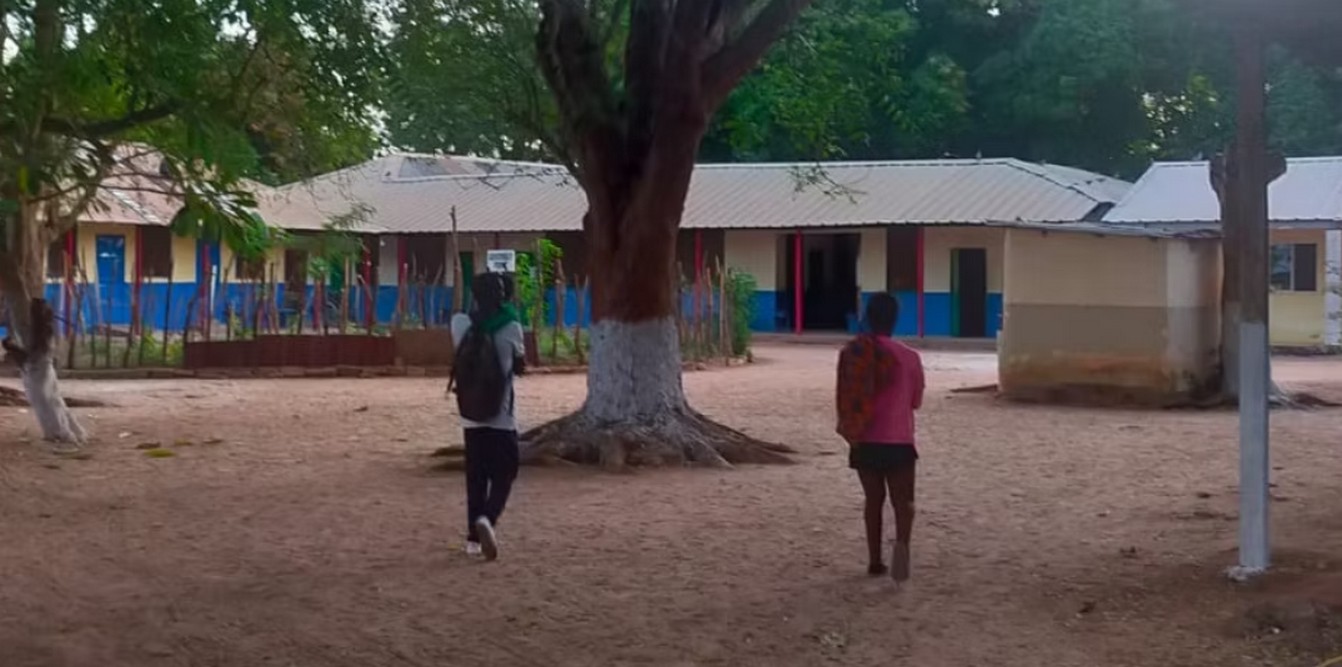

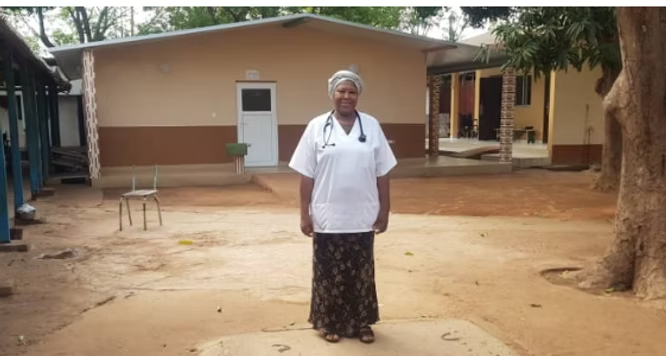
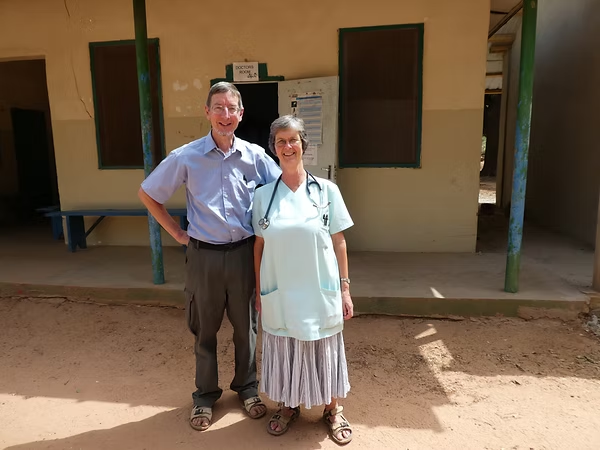
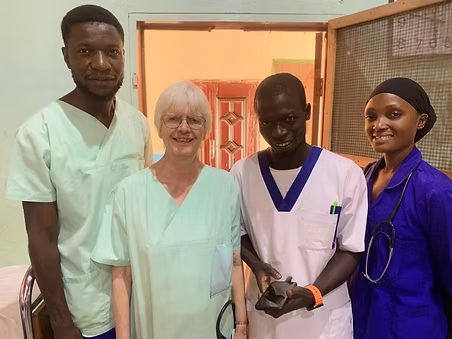
The work at Sibanor was initiated by German missionary midwifes in the 1960’s. They were part of the WEC mission organisation and for the subsequent 50 years they and their successors developed the Health Centre, staffed it with a mix of volunteer missionaries and local staff, and provided a considerable amount of financial support to meet the day-to-day costs of the Centre.
In 2017 WEC signalled their decision to close the Health Centre, since it was proving challenging to find medical volunteers and the financial strain of running the Centre was drawing funds away from other mission projects in The Gambia. The leadership of the Evangelical Church of The Gambia, believing that it was in God’s plan for the Health Centre to continue operation, took the courageous decision to ask that instead of it being closed, the Health Centre be transferred to them. At that stage the financial future for the Health Centre looked very precarious, since income from the modest fees that were affordable by the predominantly poor local population met less than half the day-to-day operating costs, and ECG did not have any significant funding available to fill the gap.
Since the transfer in 2018 the finances have indeed at times been precarious, but nevertheless the Health Centre has survived. Several individuals and organisations have contributed, wonderfully, to some major building projects and remedial work. WEC missionaries from across the globe who had links with Sibanor in the past have been generous in their regular support and a number of new supporters have emerged, particularly in the UK.
Medical mission work at Sibanor commenced in the 1960’s when a team of midwives from the mission organisation WEC established a small mission hospital with basic healthcare and maternity facilities. For many years it was the only source of medical care for the entire population of the Foni area in which Sibanor is located. The facilities at the health centre were expanded over time with more missionary volunteers – doctors and nurses, coming to work alongside the predominantly Gambian nursing team.
WEC’s mission is to reach what is termed ‘unreached people groups’ with the Gospel and several of the tribal groups served by Sibanor Health Centre fell into this category, with no Bible available in their tribal language and no Christian witness in their locality.
The Health Centre provided the opportunity to demonstrate the love of Jesus to local people (through excellent and compassionate health care), to give them the opportunity to witness the transformed lifestyle of Christian volunteers working amongst them, and to give them the opportunity to hear the good news about salvation through Jesus Christ.
In 2003 the Gambian Health Authority opened a hospital at Bwiam, which is about 15km further up-river than ECG Sibanor. This well-resourced medical facility was able to deal with more complex cases than Sibanor and gradually Sibanor evolved into a centre dealing with more minor illnesses. Nevertheless the patient workload at Sibanor is still significant and it still plays a major role in the provision of health care to the Foni’s.
In 2017 WEC decided that it should prioritise its human resources and finance in other areas and gave notice of the intent to close the Health Centre. The Evangelical Church of The Gambia (ECG) felt strongly that the mission work of the Health Centre was not yet finished, and an agreement was made to transfer the centre from WEC to ECG. Since 2018 the Centre has been under Gambian management and WEC has moved to a support role, providing some ongoing finance support (mainly from retired ex-volunteer doctors and nurses) and a steady stream of short and long term volunteers.
Today the Health Centre employs approximately 40 people in a range of medical and support roles and sees over 20,000 patients a year. It has outpatient consulting rooms, ward accommodation for inpatients comprising 30 beds, a dedicated HIV centre and a newly-opened nursing school.
During the time that WEC ran Sibanor health centre, WEC also provided training for Gambian nurses many of whom are still working at the health centre today. The training was held in high regard by Gambian health officials and many of the trained nurses are also working in government health establishments and in the Medical Research Council centre in the capital. The training was focussed on the needs of a nurse working in a health centre setting and did not result in any recognised nursing qualification.
Following the transfer of ownership of the health centre from WEC to ECG, the new leadership recognised the strategic importance of nurse training in The Gambia and initiated the establishment of a fully accredited training school, providing a two-year academic and practical training course that results in a nationally recognised Community Health Nurse qualification.
The school opened in 2024 and currently has 12 students in training. New buildings were completed in 2024 enabling the school to grow to a maximum of 60 students (30 per year’s intake) in the years ahead.
In addition to the formal nurse training, students are invited, irrespective of their faith background, to participate in daily devotions and to consider how faith impacts the way in which nursing care is provided.